
Retinitis pigmentosa (RP) is the major cause of inherited blindness, affecting 1.5 million people worldwide (a prevalence of one in 5000).
RP is characterised by the progressive loss of photoreceptor cells and peripheral vision and is associated with night-vision difficulties.
Most commonly, patients lose their sight slowly, eventually developing tunnel vision and possibly complete blindness in the late stages of the disease. Patients with RP have difficulty with mobility, navigation and night-vision.
We hope to improve the quality of life for people with retinitis pigmentosa through our Wide-View device. In 2014, we concluded tests of an early prototype wide-view device of 24 electrodes with patients with retinitis pigmentosa. We hope to begin patient tests of a full Wide-View prototype in due course.
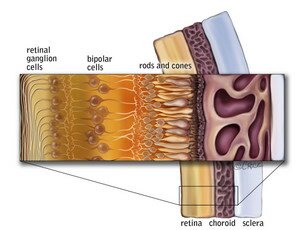
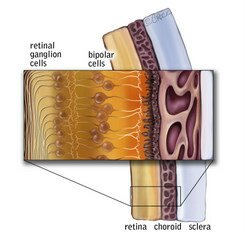
Damage to the photoreceptors renders the retina incapable of processing and transmitting visual information to the brain, which can lead to partial or complete blindness.
Although the condition can present at any age from childhood to the mid-50s, RP is usually diagnosed in early adulthood.
RP does not refer to a specific condition, rather to a group of inherited eye disorders that damage the light-sensitive cells (photoreceptors) at the back of the eye (retina).
For more information about retinitis pigmentosa, visit the:
- Retina Australia website
- Vision Australia website.